
Learn how to create a family budget UK households can actually stick to, with practical steps shaped by today’s cost of living, rising bills, and real life parenting challenges.
10 Simple Steps to Create a Budget That Actually Works
Introduction, why I finally had to get serious about money
I still remember standing in the kitchen, calculator in one hand, energy bill in the other, and four children arguing over cereal behind me. Food prices were creeping up again, the mortgage rate had reset, and suddenly our usual muddle through approach was not enough. Like many UK families right now, we felt squeezed from every direction.
That moment pushed me to finally create a family budget UK style, one that works in real life, not just on paper. Over time, and with plenty of trial and error, I built a system that fits around school runs, packed lunches, birthday parties, and unexpected boiler dramas. In this guide, I will share the exact steps that helped us regain control, shaped by current UK cost of living realities and the best advice from top personal finance experts.
The problem with most budgets
Most budgets fail because they are too strict, too complicated, or completely disconnected from real family life. Many top ranking budgeting guides now agree on three things.
- Budgets must be flexible
- They must reflect current economic pressures
- They must be reviewed regularly
With inflation still affecting food prices, interest rates remaining high, and household bills fluctuating, a static spreadsheet simply does not cut it anymore.
Step 1, Get honest about where your money goes
Before I could build a family budget UK households could rely on, I had to face the truth. I tracked every pound for a full month.
What to track
- Groceries and takeaways
- Energy and water bills
- Subscriptions like Netflix, Amazon Prime, and Disney+
- School costs, clubs, uniforms, trips
- Petrol, public transport, parking
I used Money Dashboard and later Emma, both popular UK budgeting apps, because they link directly to bank accounts and show spending patterns clearly.
Tip from experience
Do not judge yourself during this stage. Awareness comes before change.
Step 2, Calculate your true monthly income
Next, I worked out what actually comes in each month, not what I hoped would come in.
Include
- Salaries after tax
- Child Benefit
- Universal Credit or other support if applicable
- Side income
Many families forget annual or quarterly income. Spread it monthly so your family budget UK plan stays realistic.

Step 3, Separate needs from wants
This step was uncomfortable, but powerful. I split spending into two columns.
Needs
- Mortgage or rent
- Council tax
- Energy and water
- Basic food shop
- Transport
Wants
- Takeaways
- Extra subscriptions
- Impulse Amazon orders
- Treats and hobbies
By doing this, I could clearly see where we had flexibility during tighter months.
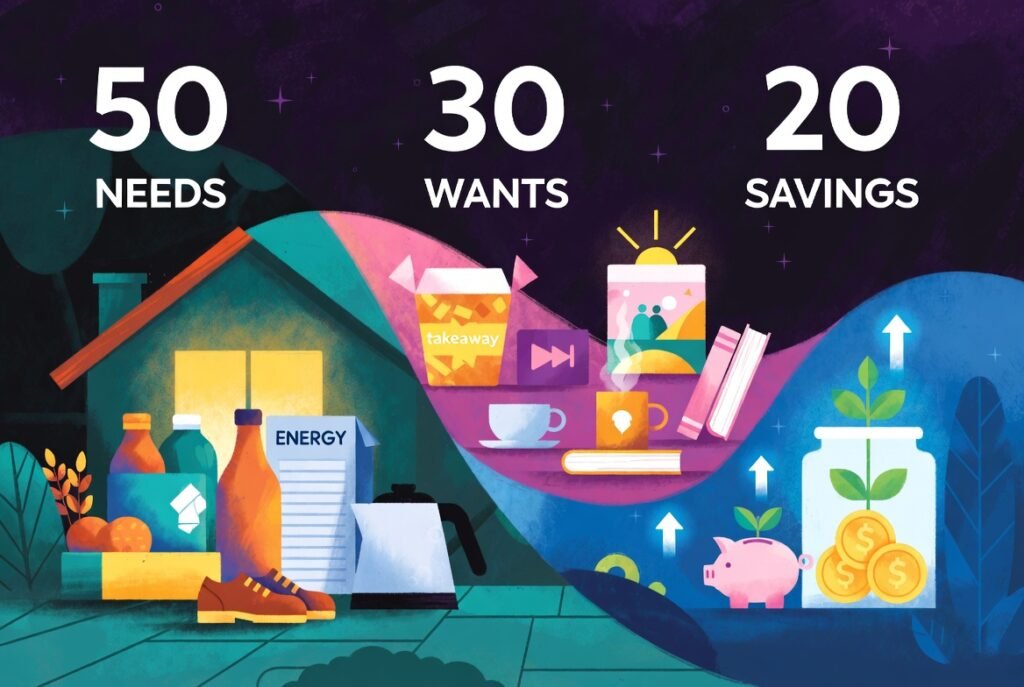
Step 4, Use the 50 30 20 rule as a starting point
Many UK finance experts, including Martin Lewis from MoneySavingExpert, recommend the 50 30 20 rule as a guideline.
- 50 percent needs
- 30 percent wants
- 20 percent saving or debt repayment
However, in today’s climate, many family budget UK plans need adjustment. For us, needs were closer to 60 percent. That is normal, and it is not failure.
Many UK finance experts recommend the 50 30 20 rule as a flexible starting point rather than a strict formula. When I first came across it, I realised it finally explained why our money always seemed to disappear before the end of the month. If you want a clear, family-friendly breakdown of how this approach works in real life, the Smart 50/30/20 Budget | Simple Money Guide explains how to adapt the rule for modern UK households and rising living costs.
Step 5, Plan for rising household bills
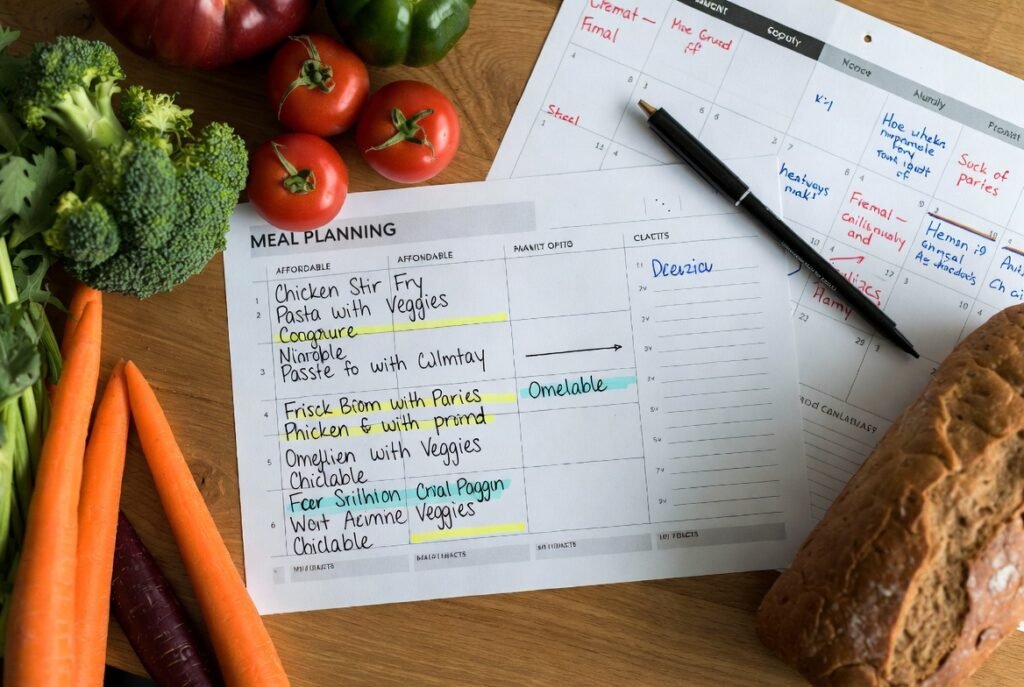
Recent news coverage has shown how volatile energy and food costs can be. Instead of reacting every time prices rise, I now build buffers into our budget.
Practical ways I did this
- Set energy direct debits slightly higher than average
- Meal plan around lower cost supermarket ranges like Aldi and Lidl
- Bulk buy staples when prices dip
Rising food costs were one of our biggest challenges, especially with a large family to feed. Meal planning became our secret weapon for keeping the family budget in UK households. I go into much more detail about this in “10 Smart Family Meal Planning on a Budget Hacks ” on budgetkin.com, including how I shop, batch cook, and minimise waste.
Step 6, Make savings automatic, even if they are small
Saving felt impossible when money was tight, but automation changed everything.
I set up
- A standing order of £25 a month into a savings account
- A separate pot for Christmas and birthdays
Using Monzo Pots helped us visualise progress. Even small amounts add up, and every family budget UK system benefits from consistency.
Step 7, Budget for the chaos of family life
Top ranking budgeting blogs often miss this part. Families are unpredictable.
I now include sinking funds for
- School uniforms
- Car repairs
- Home maintenance
- Medical and dental costs
This single step stopped our budget from collapsing every time life happened.
Step 8, Use tools that work for UK families
Not all budgeting tools suit large families. These worked best for us.
- YNAB, for zero-based budgeting
- Emma, for tracking subscriptions
- Monzo, for shared visibility
You can read more about choosing tools in this guide on budgetkin.com
Step 9, Review your budget every month
A family budget UK households stick to must evolve. Each month, I sit down with a cup of tea and review.
I ask
- What worked
- What felt stressful
- What changed in our bills
This habit helped us adapt quickly to interest rate changes and seasonal costs.
Step 10, Get the whole family involved
Finally, I stopped carrying the mental load alone.
- We talk openly about money
- The kids understand why we plan meals
- Big purchases are discussed
According to child finance educators, involving children builds long-term money confidence, and I can see it happening in our home.
For more on teaching kids about money, see this article on budgetkin.com
Key takeaways
- A family budget UK households trust must reflect real life, not perfection
- Flexibility matters more than strict rules
- Automation and review are your best friends
- Small changes create big stability
Conclusion, your next step starts today
If a busy mum of a large family can create a family budget UK life actually fits into, so can you. Start with one step today, even if it is just tracking your spending. Over time, those small actions will turn into confidence, calm, and control.
Call to action
Download a notebook, open a budgeting app, or print this guide. Then begin. Your future self, and your family, will thank you.