

Discover practical budgeting for kids strategies. Teach children about money, savings, and spending with fun activities to build lifelong financial skills.
Introduction
When our kids asked why we couldn’t buy every toy they saw, I realized it was time to teach them something deeper: how budgeting for kids works in real life. We didn’t want money to be a mystery. We wanted them to understand its value, make choices, and feel empowered.
In this post, I share how we teach our children about money by involving them in our family’s budgeting process. You’ll read detailed, hands-on strategies, plus insights that many parenting blogs often miss. We’ll cover:
- Why children should learn budgeting for kids early
- Age-appropriate methods and tools
- Ways to involve kids in your real household budget
- Pitfalls to avoid
- Sample lessons and activities
- Our reflections and next steps
Through it all, we focus on budgeting for kids as the core idea. We weave in related keywords like “financial literacy for kids,” “teaching money skills,” and “kids allowance system.”
Let’s dive in.
Why Involve Kids in Budgeting Early?
Starting early has big payoff. Research and expert advice support it:
- The FDIC encourages including children in paying bills or discussing large purchases so they learn money choices. fdic.gov
- Charles Schwab suggests giving an allowance tied to tasks helps children see that money must be earned and budgeted. Schwab Brokerage
- MoneySense recommends explaining everyday spending decisions (like comparing brands) to kids as natural teaching moments. MoneySense
By involving our children, we aim not just for them to memorize rules, but to build confidence and judgment about money.
Stage 1: Laying the Foundation (Ages 4 – 8)
1. Use Visual Tools: Clear Jars or Envelopes
We begin simply: three clear jars labeled Save, Spend, Give. Every coin or small allowance they receive goes into one of the jars. When they watch the jars fill, they internalize the concept of allocation. This “jar system” is widely recommended. Banzai Blog
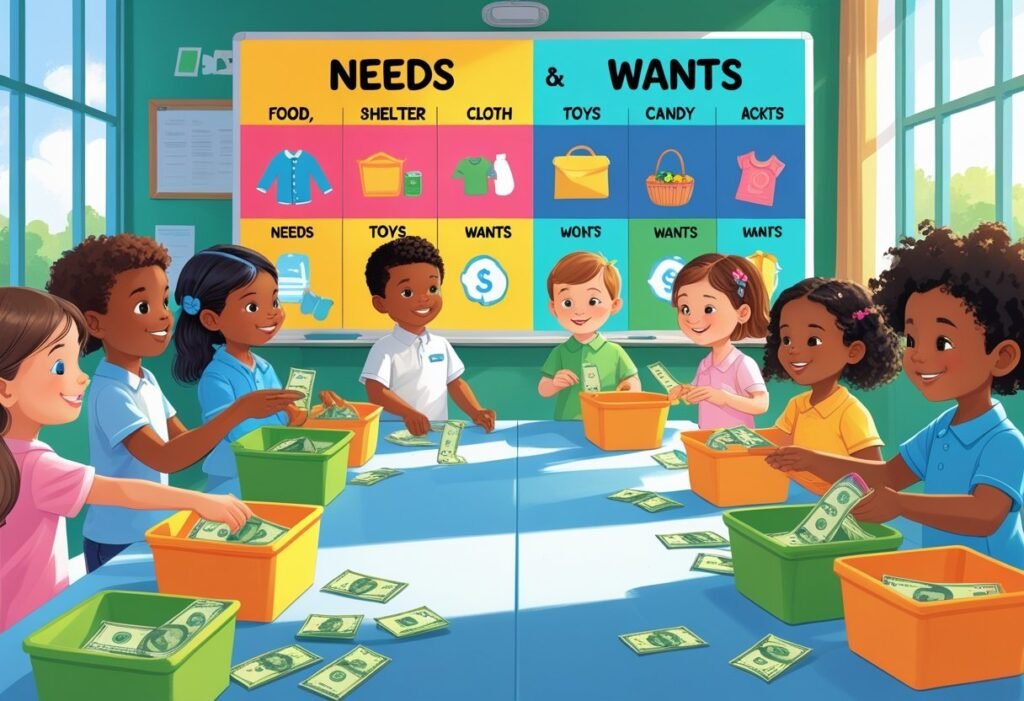
2. Teach Needs vs Wants
While grocery shopping, we talk about choosing between brands. We point out how some items are “needs” (bread, milk) and others are “wants” (candy, toys). This helps them see that not every desire makes it into a budget. GoHenry+1
3. Introduce Earning
We assign small chores like sorting socks or watering plants, and link them to a modest allowance. This helps children understand that money comes from work, not magic. One blog describes turning chores into “missions” with rewards. Investopedia
Stage 2: Early Practice (Ages 9 – 12)
By this age, kids have more awareness and can take on slightly more responsibility.
4. Begin a Simple Budget
We show them how to list what money they expect (allowance, gifts) and then subtract anticipated spending and saving. GoHenry’s blog suggests helping kids list income and fixed costs like subscriptions. GoHenry

5. Set Goals & Encourage Delayed Gratification
If they want a toy worth £30, we help them set aside small amounts weekly until they reach it. This teaches patience and goal-orientation – a critical part of budgeting for kids. primewayfcu.com
6. Involve Them in Family Finances
Once we let them peek at our grocery or utility bills, they began to ask questions. We explain how we decide between brands, plans, and what to cut if the budget is tight. The FDIC recommends using real household examples so children see real choices. fdic.gov (Related: How to Create a Simple Family Budget in 5 Easy Steps).

Stage 3: Young Teens & Preparing for Adulthood (Ages 13 – 17)
7. Introduce Bank Accounts & Technology
We opened a savings account in their name (custodial if needed). We also let them manage a small debit or allowance app (like GoHenry). GoHenry offers a children’s banking app that helps teach kids financial habits. Wikipedia
8. Teach Credit, Interest & Debt
We explain how credit cards work, the cost of borrowing, and how interest accumulates. Schwab recommends letting older kids try small investments or using fractional shares. Schwab Brokerage
9. Encourage Side Jobs or Income Projects
They might do babysitting, pet care, or part-time work. Letting them earn real money reinforces the budgeting cycle: earn, spend, save.
Tools, Apps & Resources We Use
- GoHenry: A children’s prepaid card & app that helps track spending. Wikipedia
- Jar or envelope systems: Clear jars or envelopes remain powerful visual tools.
- Games & simulations: We play a “budget board game” (like one described by The CEO Kid) to simulate real-life money choices. The CEO Kid
- Digital lessons & sites: Ontario’s “Your Money, Your Future,” or Canada’s interactive guides on saving vs spending for ages. Government of Canada
Our Step-by-Step Plan with Kids
Here’s how we rolled this out in our home:
| Step | Age Range | Activity | Lesson / Benefit |
|---|---|---|---|
| 1 | 5-7 | Jar system + small allowance | Visualizing savings & splits |
| 2 | 8-10 | Needs vs wants during shopping | Prioritizing spending |
| 3 | 9-11 | Simple budget worksheet | Understanding income & expense |
| 4 | 11-13 | Goal saving plan | Patience & tracking |
| 5 | 13-15 | Kid bank account / app | Technology and real money |
| 6 | 14-17 | Small job project | Earn, budget, save, give |
Each step builds on the last, increasing responsibility gradually.
Pitfalls & How We Avoided Them
- Expecting perfection: Kids will make mistakes. We treat them as lessons, not failures.
- Too much complexity too early: Overloading kids with adult terms (APR, amortization) backfires.
- Not discussing our own finances: We modelled our choices-kids see us revising plans.
- Rigid allowance systems: Some months they earned more or less; we adjusted instead of punishing.
What Changed for Us
- Our children began to talk openly about money.
- They resisted impulse buys more naturally.
- We had fewer “can you lend me?” conversations.
- They saved for their own items without stress.
Supplementary Activities & Ideas
- Needs vs Wants Sort Cards: Use images or household items and have children sort them.
- Budgeting for kids Board Game Night: Simulate rent, unexpected expenses, income cycles.
- Family Money Meeting: Once a month, we share our real household budget and let kids contribute ideas.
- Reward System: When they hit a savings goal, we match a small percentage as a bonus.
Conclusion & Call to Action
Teaching children about money through budgeting for kids is one of the greatest gifts we can give them. We didn’t just want them to receive; we wanted them to understand, plan, and choose wisely.
Your next steps:
- Start with the jar system this week.
- Hold a family talk about your real budget.
- Involve kids in one financial decision (groceries, small purchase).
- Revisit this post for more techniques.


Pingback: Best Guide for Kids Saving Money: Piggy Banks vs Banks - BudgetKin
Pingback: 6 Simple Rules to Use Credit Cards Responsibly - BudgetKin
Pingback: Family Money Date Night: A Fun Way to Budget Together - BudgetKin