

Discover the best way for kids saving money made simple. Learn how piggy banks and bank accounts compare, and find the right choice for your family’s habits and goals.
Introduction
In a busy house with five kids. Kids saving money has become one of our favourite family challenges. Between school runs, snack requests, and endless laundry, I’ve learned that teaching children to save is about more than spare coins in a jar. When our eldest wanted to save birthday money for a new gadget, we faced the classic parent question: should we stick with the trusty piggy bank or open a proper bank account?
That question opened up a whole new discussion in our home about kids saving money and how different tools teach different lessons. Piggy banks are simple, visual, and perfect for little ones learning what saving looks like. Bank accounts, on the other hand, teach real-world skills like security, interest, and responsibility.
In this guide, I’ll share what worked for our family, insights from financial experts, and how to decide the best way for kids saving money to become a lifelong habit.
Key Takeaways
- Piggy banks offer visual and simple tools for younger children to start saving.
- Bank accounts bring safety, interest, and real-world finance experience for older kids.
- Every child’s age, goal, and money habits are different; you can use both tools together.
- Clear routines, regular conversations, and tools like the GoHenry app support smart kids saving money habits.
- Deciding early and having the right saving method contributes to long-term financial confidence.
Why This Matters: A Real Problem at Home
In our house, we had a moment of panic when we realised our 10-year-old’s piggy bank was overflowing, while the 14-year-old had a digital app but couldn’t see how those savings added up. Without the right tool, children may feel disconnected from real saving, and instead focus on spending.
The question became: what’s the best way to teach kids saving money so they feel empowered, not confused? According to financial education experts, early saving routines help children understand value and responsibility. Greenlight
Understanding the Two Options: Piggy Bank vs Bank Account
Piggy Bank: The Classic Starter
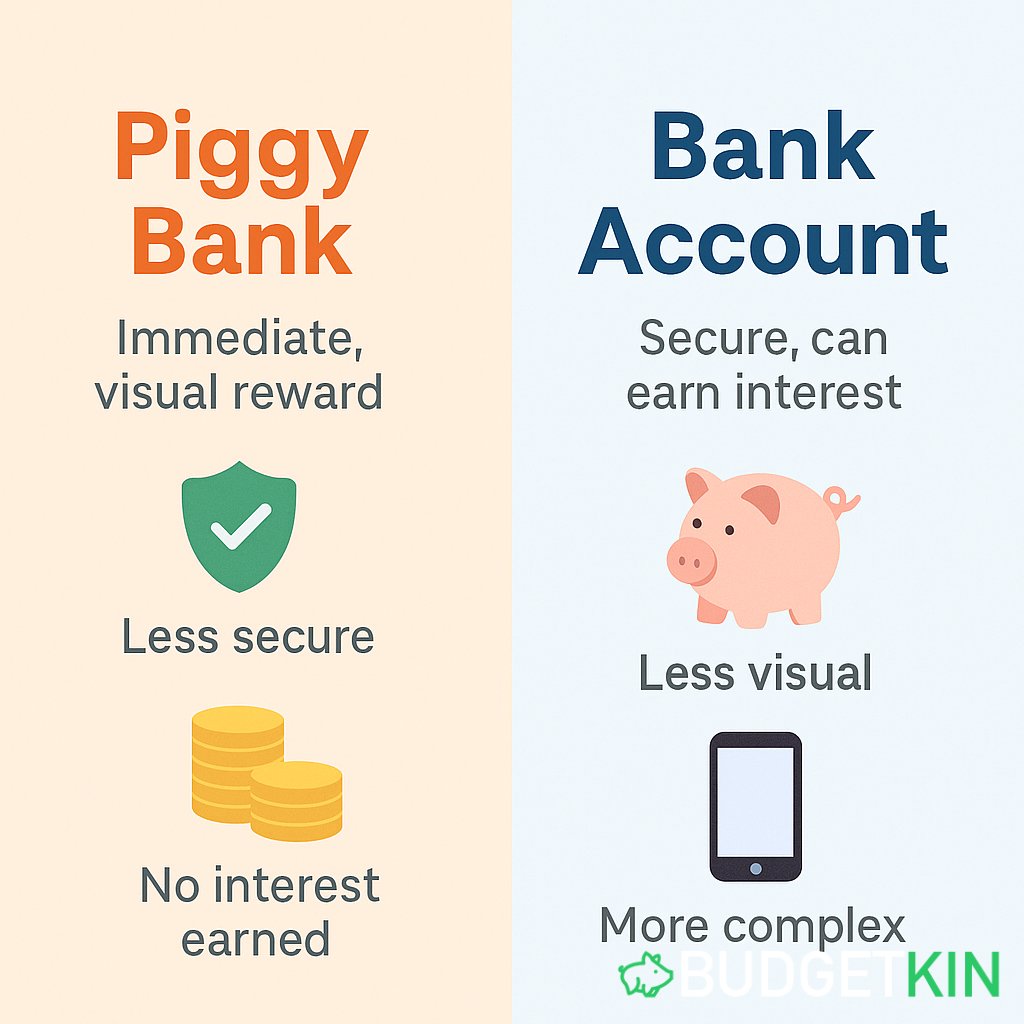
Pros
- Immediate, visual reward: your child sees coins pile up.
- Easy set-up, no fees, no bank visits.
- Perfect for younger children just getting used to saving. For example, the ING article says piggy banks are excellent educational tools for young children.
Cons - No interest earned, so savings may lose value with inflation.
- Less secure than bank accounts, and money may be spent impulsively.
- Doesn’t teach children how real banks work.
Bank Account: The Long-Term Tool
Pros
- Savings are secure and may earn interest. The “What’s better” guide from ING notes that savings accounts offer safety and interest.
- Introduces children to real banking, statements, and tracking a major advantage as they grow up. The ParentCo article emphasises how children with bank accounts learn wise money decisions.
- Good for bigger goals, longer-term savings and more mature money habits.
Cons - More complex to open and maintain; children may need support.
- Some accounts have fees or require minimum deposits.
- Less visual: younger children may not feel the “reward” of saving if they can’t physically see the money.
Which Method Fits Which Age and Goal?
Here’s a quick guide we created for our family that you might adapt at home:
| Age Range | Best Saving Method | Why It Works |
|---|---|---|
| 4-7 years | Piggy bank or clear jar | Visual and simple, encourages habit. |
| 8-11 years | Piggy bank with transition to account | Kids begin to understand saving for specific goals. |
| 12-16 years | Bank account with app or debit-link | Teaches real banking, tracking, and responsibility. |
In our home, I let the younger ones use decorated jars so they could feel the progress, and when they reached a threshold (say £50), we opened a youth account together. This hybrid method helped us make saving fun and meaningful. Research shows this two-stage method works well to encourage kids saving money.

How to Make Both Work for Your Family
Here are practical steps and tips we used, and you can too, to help children save smartly:
- Set clear savings goals: For example, “Save £30 for the bike helmet” or “Put £1 every week into my bank account”. Goals give purpose to saving.
- Use visual tracking: With piggy banks use stickers or charts. Once children move to bank accounts use apps like GoHenry to track progress.
- Teach the difference between spending and saving: Use the jars method for younger kids, then talk about how bank accounts help you plan for long-term.
- Make it a habit: We chose every Friday as “Savings Review Night” where each child counts their coins or checks their balance. Routines reinforce the habit of kids saving money.
- Celebrate milestones: When a child reaches a goal, celebrate with a small treat or recognition. This positive reinforcement encourages more saving.
- Educate about interest and banking fees: For older children, explain how bank accounts may offer interest but may also charge fees. The Bankaroo blog highlights this difference.
Related: Best 5 Pocket Money Tips: How Much Should Kids Save?
My Family Story: How We Selected the Right Method
Our kids range from age 5 to 16. Initially, all of them used piggy banks. For our 5-year-old, it made perfect sense: she loved dropping coins in, hearing the clink, and watching the jar fill. But as our 13-year-old saved for his first smartphone, the piggy bank didn’t feel suitable. We moved him into a youth savings account and showed him how his money earns interest and can be tracked via an app.
The difference was clear: the younger kids still loved the fun of saving coins and seeing progress physically; the teen enjoyed watching his digital account grow and checking on his balance.
Both methods supported kids saving money at different stages. Over time, we transitioned each child when they reached a target or age, which kept the process smooth, meaningful and scaled to their understanding.
Realistic Scenarios: When to Use a Piggy Bank vs a Bank Account
Here are some typical situations we discussed at home:
- Scenario: A 7-year-old wants to save for a toy. Use a piggy bank for immediate visual feedback and simple saving.
- Scenario: A 12-year-old wants to save £100 for a weekend away. Open a youth savings account so they experience banking and tracking.
- Scenario: You receive a big gift (e.g., £50) for your child’s birthday. This is a good moment to deposit into a bank account rather than a jar at home. Tip: “Why not use both resources to harness money management skills?”
Final Thoughts & Decisions to Make
To pick what works best for your family think about:
- Your children’s age and maturity
- The saving goal size and timeframe
- Whether you want a visual, immediate tool (piggy bank) or a real-life savings tool (bank account)
- How actively you will track and discuss saving habits
At the end of the day, both methods support the same goal: helping children to develop healthy habits of kids saving money and carry into adulthood. The key is to start early, keep it meaningful, and make sure your children understand not just that they are saving, but why.
Conclusion & Call to Action
Deciding between a piggy bank and a bank account doesn’t have to be complicated. If your child is young and just starting out, the fun, visual nature of a piggy bank is perfect for building early interest. As they grow and their goals increase, a proper bank account offers safety, real-world experience, and long-term benefit.
In our family, we combined both tools so that each child uses the method that fits their age, mindset and goal. And you can too. Tonight, I encourage you to pick one saving tool with your child, set a goal together, and start the habit of kids saving money. Open a jar, visit the bank, track progress and celebrate each milestone. The habits they build now will empower them with confidence, discipline and financial freedom as they grow.
If you found this helpful, please share it with another parent or visit our site for more guides, such as “Best 5 Pocket Money Tips” and “Teaching Kids Budgeting”. Together, we can cultivate smart money habits in our children and help them become financially confident adults.


