If you use a credit card regularly, this question usually comes up sooner or later: Should I pay my credit card in full every month, or is it okay to carry a balance?
Many people worry that paying in full might hurt their credit score, while others assume carrying a balance is normal. In reality, paying your credit card in full every month is one of the most effective ways to stay out of debt, but it is not always realistic for every household at every stage.
This guide explains when paying in full makes sense, when it might not be possible, and how to decide what is right for you.
Should I Pay My Credit Card in Full Every Month?
In most cases, yes, paying your credit card in full every month is the healthiest option.
When you pay in full:
- You avoid interest charges
- Balances do not build up
- Credit cards act as a payment tool, not a loan
- Budgets stay clearer
For people who can afford it, paying in full prevents the slow drift into long-term credit card debt.
Why Paying in Full Saves So Much Money
Credit card interest rates in the UK are high compared to most other borrowing.
When you do not pay in full:
- Interest is charged daily
- Small balances grow quietly
- The total cost of spending increases
Paying your credit card in full every month stops interest before it starts. Even one missed full payment can add unnecessary cost over time.
This behaviour is part of the wider approach explained in Credit Cards and Debt Explained for UK Families.
Does Paying in Full Help or Hurt Your Credit Score?
A common myth is that you need to carry a balance to build credit. This is not true.
Paying in full:
- Does not harm your credit score
- Shows responsible use of credit
- Keeps utilisation lower over time
Your credit score benefits from:
- On-time payments
- Controlled utilisation
- Consistent behaviour
You do not need to pay interest to demonstrate reliability.
What Happens If You Do Not Pay in Full?
When you do not pay your credit card in full:
- Interest is added to the balance
- Debt carries into the next month
- Minimum payments become the baseline
Over time, this can make everyday spending feel permanent rather than temporary.
This pattern is explained in more detail in Paying the Minimum on a Credit Card, What Really Happens.
Is It Ever OK Not to Pay in Full?
Yes. There are times when paying in full is not realistic.
This may include:
- Temporary income drops
- Unexpected expenses
- Short-term cash flow issues
Paying less than the full balance is better than missing a payment. The key difference is whether this is temporary or ongoing.
If balances are reducing over time, the situation is very different from relying on minimum payments indefinitely.
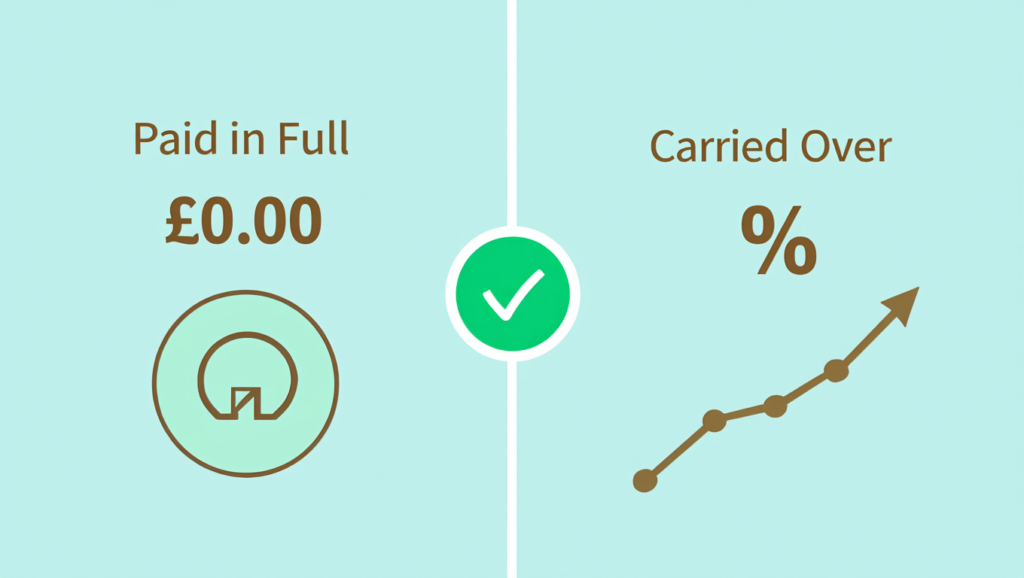
Paying in Full vs Carrying a Balance
Paying in full:
- Keeps spending temporary
- Reduces stress
- Protects your budget
Carrying a balance:
- Adds interest
- Extends repayment time
- Makes budgets feel tighter
This is why many people feel credit cards are bad for budgeting. The real issue is not the card, but the balance.
This relationship is explored further in Are Credit Cards Bad for Budgeting?
How Paying in Full Affects Credit Card Utilisation
Paying in full helps keep credit card utilisation lower.
Lower utilisation:
- Reduces financial pressure
- Improves credit confidence
- Makes spending feel manageable
High utilisation, even with on-time payments, can hold credit scores back. This concept is explained in Credit Card Utilisation Explained (UK).
What If I Can Only Pay Part of the Balance?
If paying in full is not possible right now:
- Pay more than the minimum if you can
- Avoid new spending on the card
- Focus on steady reduction
Even small overpayments shorten repayment time significantly and reduce interest costs.
If this is a recurring issue, it may also be worth reviewing how many cards you hold, which is covered in How Many Credit Cards Should I Have in the UK?
A Simple Rule to Decide What to Pay
Ask yourself:
- Is this balance from everyday spending?
- Can I clear it without stress?
- Will paying in full help my budget next month?
If paying in full creates pressure elsewhere, a temporary partial payment may be sensible. The goal is progress, not perfection.

Final Thoughts
If you are asking should I pay my credit card in full every month, the most honest answer is this:
If you can, paying in full is one of the best habits you can build.
If you cannot yet, focus on reducing balances steadily and avoiding long-term reliance on credit.
Credit cards work best when balances are temporary and controlled, not ongoing and stressful.
For a complete understanding of how credit cards, balances, and budgeting fit together, read Credit Cards and Debt Explained for UK Families.

Pingback: How Many Credit Cards Should I Have in the UK? - BudgetKin