
Discover the 7 proven steps to effective envelope system budgeting that actually work. Learn how to use envelopes-physical or digital-to control spending, save money, and keep your family on budget effortlessly.
Introduction
I still remember the first time our family tried to budget seriously. We’d always tell ourselves, “this month we’ll be better,” only to over-spend on dinners, treats, and impromptu shopping. Then I stumbled on a method so simple it felt almost too old-school: the envelope system.
We began using it for groceries, entertainment, and “fun money” categories-and it changed everything. Instead of vague promises, we touched our budget with our hands. We knew when an envelope was empty, and that became a real signal to stop spending.
In this guide, I’ll walk you through the envelope system budgeting (aka “cash stuffing”), explain how it works for families, show you pros and cons, share tools and strategies, and help you get started (whether you prefer physical cash or digital envelopes). By the end, you’ll have a practical, human-friendly tool to help your family stay on budget.
What Is the Envelope System (and Why It Works)
The concept in a nutshell
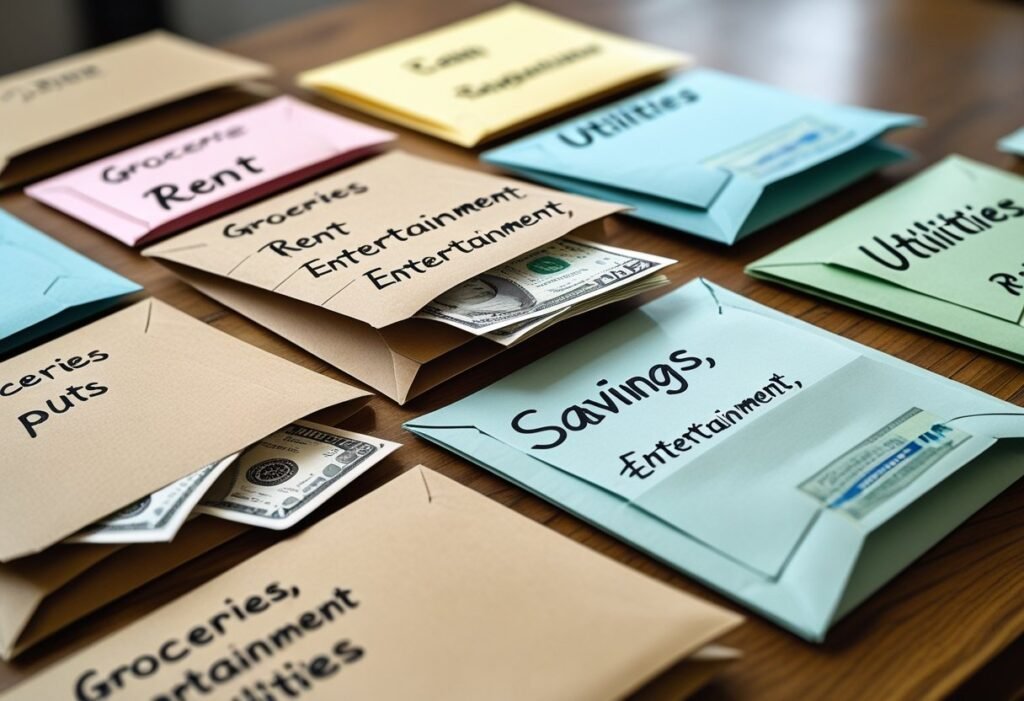
The envelope system budgeting (also called the cash envelope method or cash stuffing) means you allocate money for each spending category into separate envelopes, and when one envelope is empty, you stop spending in that category until the next replenishment. thebudgetmom.com+3NerdWallet+3Capital One+3
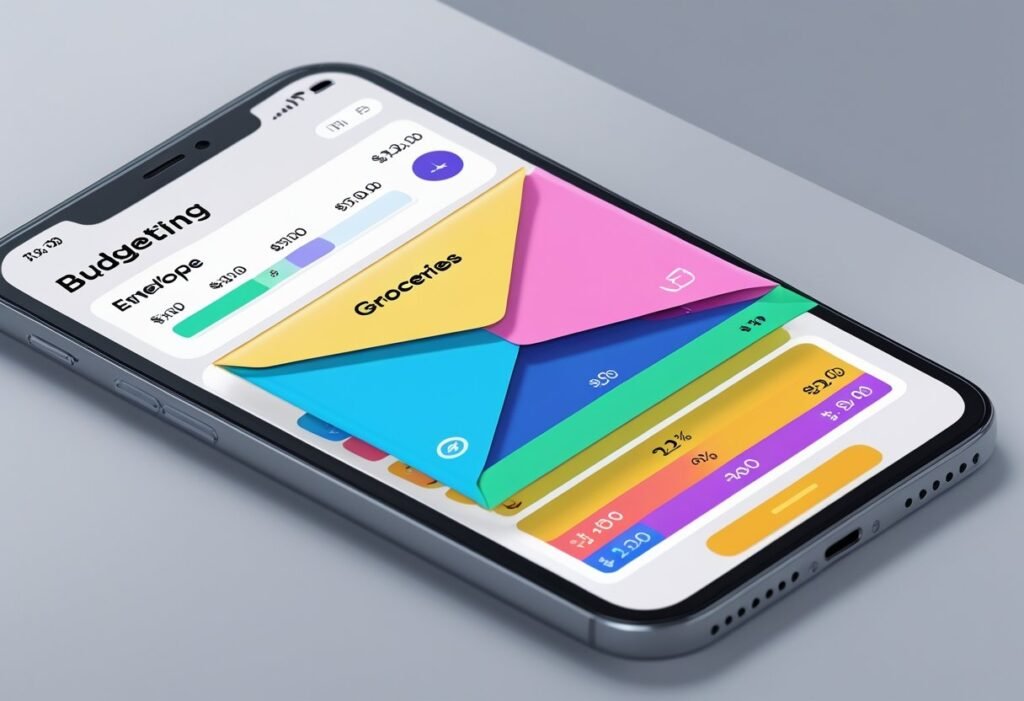
Originally, people used physical envelopes and cash. But today you can also use digital envelopes (via budgeting apps or bank sub-accounts). Capital One+2ameriserv.com+2
Why it works
Here’s why the envelope system is powerful:
- Tangible spending: Cash in hand feels “real,” so you’re more reluctant to overspend. SoFi+2National Council on Aging+2
- Psychological boundary: Once an envelope is empty, that’s your limit. It encourages discipline. firstalliancecu.com+3Ramsey Solutions+3National Council on Aging+3
- Instant visual feedback: You see how much remains in each category. National Council on Aging+4Capital One+4thebudgetmom.com+4
- Reduces impulse overspending: You can’t just reach for a card-if there’s no cash, you pause. SoFi+2NerdWallet+2
- Adaptable: You can combine physical and digital envelopes. ameriserv.com+2SoFi+2
That said, the envelope system is not perfect. Later I’ll tell you where it sometimes struggles-and how to work around those gaps.
Setting Up an Envelope System: Step by Step
Below is a step-by-step path I used (and still refine) with our family.
1. Understand your income & expenses
Before you start, you need a snapshot of your income and an understanding of where your money goes. You might want to create a simple family budget first-this clarity helps determine how much you can safely put into each envelope.
- Calculate your monthly take-home income (after taxes, deductions).
- List your fixed expenses (rent/mortgage, utilities, insurance, etc.).
- Look at past bank statements or receipts to see what you typically spend in variable categories (groceries, transportation, entertainment). Ramsey Solutions+3thebudgetmom.com+3lunchmoney.app+3
If you don’t track yet, spend a month doing tracking only before assigning envelopes. Many guides (e.g. The Budget Mom) emphasize this first step. thebudgetmom.com
2. Choose which categories to envelope
You can keep it simple or detailed-what matters is that the categories reflect your real outflows. Common categories include:
- Groceries / Food
- Dining out / Entertainment
- Transportation / Fuel
- Personal care / toiletries
- Clothing / shoes
- Gifts / charity
- Miscellaneous / buffer
You don’t necessarily need an envelope for fixed bills (like rent or insurance) if they’re paid automatically-you could handle those outside the envelope system and focus the envelopes on variable spending. firstalliancecu.com+3Capital One+3ameriserv.com+3

3. Decide your budget amounts
Based on your past spending and what you want your limits to be, assign a dollar (or pound) amount to each envelope.
Important: be realistic. If your “food” envelope always runs out by the 20th, that’s a sign to adjust next month. firstalliancecu.com+3National Council on Aging+3thebudgetmom.com+3
4. Withdraw / allocate funds (“stuff the envelopes”)
On payday or at the start of your budget period:
- Withdraw or transfer the total amount for your envelope categories.
- Physically put cash in each envelope (if using cash).
- If you’re going digital, move allocated amounts to sub-accounts or mark categories in your budgeting app. Ramsey Solutions+4Capital One+4lunchmoney.app+4
5. Spend exclusively from the envelope
Whenever you make a purchase, you take from the relevant envelope. You write the transaction on the envelope or ledger so you can track remaining balance.
Rule of the system: once an envelope is empty, you stop spending in that category. You could choose to borrow from another envelope-but better yet, learn to reallocate in next month. SoFi+3National Council on Aging+3Ramsey Solutions+3
6. At month’s end, review & adjust
At the end of your budget period:
- See which envelopes ran out too early (you overspent).
- See which had leftover money.
- Rebalance your allocations for the next period accordingly.
Over time, your budget reflects your true habits.
This review step is often skipped in many budget systems, but it’s vital for growth.
Physical Cash Envelopes vs Digital Envelopes
Many people prefer using apps for digital envelope systems. To find out which platforms are user-friendly for households, check out our post on the Best Budgeting Apps for Families (Top 5 Picks).
| Method | Pros | Cons | Best Use Cases |
|---|---|---|---|
| Physical cash envelopes | Very tactile, hard to cheat, strong discipline | Risk of loss/theft, inconvenient for large bills, not usable for online payments | Local stores, groceries, cash-dominant families |
| Digital / virtual envelopes | Convenient, safe, integrates with banking/apps | Less “pain” when spending, may require diligent tracking | Online purchases, hybrid systems, tech-savvy users |
| Hybrid approach | You get benefits of both | Slight complexity to manage | Use cash for categories you overspend, digital for rest |
Some tools and brands to explore:
- Clever Fox Cash Envelopes (durable reusable envelopes) Clever Fox®
- Ramsey Store’s Essential Cash Envelope System store.ramseysolutions.com
- Goodbudget app, which mimics envelopes digitally Goodbudget
- Lunch Money app (blog shows how to mimic cash stuffing) lunchmoney.app
When I first started, we did physical envelopes for groceries/entertainment and digital envelopes for everything else. It gave us the discipline where we needed it, and the convenience elsewhere.
Anecdotes, Challenges & Tips
Family scenario – “Saturday treat dilemma”
One Saturday, our youngest asked for ice cream. We checked the “entertainment” envelope: only £2 left. Immediately, my spouse and I had a quick chat: was the treat worth borrowing from the “clothing” envelope? No-we said “not this time.” That small decision reinforced discipline and eventually reshaped how we budgeted “fun money.”
Challenges you may face (and how to overcome)
- Risk of theft or loss (physical cash)
- Don’t carry all envelopes with you-just those you need.
- Use lockable envelopes or wallets.
- Keep life savings in secure bank accounts, not in envelopes. National Council on Aging+2NerdWallet+2
- Inconvenience in modern digital life
- Many vendors are cashless; you’ll need to adapt or use a hybrid approach. Capital One+2ameriserv.com+2
- For subscriptions or online bills, stick to automatic transfers outside the envelope system.
- Temptation to borrow from other envelopes frequently
- Do this only rarely. If you do it often, it’s a sign your allocations are off.
- Envelope runs out too early (habitual overspending)
- Next month, reduce that allocation or consciously cut where you overspent.
- Add a “buffer” category for unforeseen small expenses.
- “All or nothing” thinking
- Don’t abandon the system just because you broke one rule. Adapt, adjust, and continue.
My own learning curve included several months where the “eating out” envelope vanished by mid-month. I learned to trim it and we started cooking more. Over time, the system nudged healthier habits.
How Families Can Use It (with Kids, Teens, Partners)
Here are practical ways to involve every family member:
- Kid spending envelopes: Give older kids a small envelope for pocket money. When it’s gone, it’s gone.
- Joint and personal envelopes: Use shared envelopes (groceries, utilities) and personal ones for each partner (hobbies, “you money”).
- Envelope planning sessions: Do a monthly “budget night” where everyone talks about priorities, categories, and challenges.
- Teaching discipline and financial sense: Kids see that if the envelope is empty, you don’t spend more-no exceptions.
- Rotate or share envelopes: If one partner often overspends in “gifts,” the other could help redesign that category.
In our home, we label one envelope “Family Fun” and another “Parents’ Choice”-the kids can help decide what goes in those categories.
Extra Strategies to Boost the System
- Use a buffer / “miscellaneous” envelope for unpredictable small costs (stationery, parking, random purchases).
- Periodic top-ups: If it’s late in the period and an envelope is close to zero but you expect leftover cash elsewhere, you may top it up sparingly.
- Separate savings envelopes: Use envelopes for goals (holiday fund, gifts, car repairs).
- Visual tracking: Use stickers, colored tabs, or graphs on envelopes to see how quickly they’re being spent.
- Zero-based budgeting: At the start, assign every pound/dollar to an envelope (or somewhere) so nothing is left “unassigned.”
- Combine with digital alerts: Use your banking app’s alerts to tell you when a sub-account (digital envelope) is low.
- Don’t neglect review time: This is where you reflect, tweak, and improve super important.
Many top personal finance blogs emphasize the review step, but in practice people skip it. Don’t make that mistake.
Pros vs Cons Recap
Pros:
- Encourages discipline and awareness
- Reduces impulse spending
- Makes your budget physical and visible
- Helps calibrate true spending habits
- Flexible (can be adapted to digital) Ramsey Solutions+3ameriserv.com+3NerdWallet+3
Cons / Considerations:
- Managing physical cash has risk
- Not as convenient for online or large purchases
- Doesn’t earn rewards or interest like credit cards
- Requires consistent discipline
- May feel restrictive for some users
Understanding both sides helps you build a system you’ll actually stick with.
Real-Life Example: Sample Budget Table
Here’s a simplified monthly envelope plan for a family. (You could insert as an infographic or image.)
| Envelope Category | Allocation (£) | Notes / Adjustment (if overspend) |
|---|---|---|
| Groceries | 400 | Usually slightly high – consider reducing |
| Dining Out / Entertainment | 120 | A frequent envelope to tweak |
| Transportation / Fuel | 100 | Based on recent history |
| Personal Care (haircuts, toiletries) | 50 | Low-frequency category |
| Clothing / Gifts | 40 | Lump occasional spending here |
| Miscellaneous / Buffer | 30 | For unplanned small things |
| Kids’ pocket money | 20 | For school snacks/ treats |
| Total variable envelopes | 760 | This is the “spendable” pot |
You might handle fixed bills (rent, utilities, insurance) outside the envelope system. After one or two months, you’ll see which categories are off and refine them.
Pro Tips & Common Mistakes
- Don’t over-category: Too many envelopes = too many fiddly decisions.
- Start with your overspent areas: If you always bust the “entertainment” envelope, start there.
- Be flexible in Month 1–3: Your allocations will change.
- Record every transaction: Even small ones if you skip, the envelope balance becomes inaccurate.
- Avoid “borrowing envelope debt” as a habit.
- Use a backup: Carry a small sum of spare cash (or leave one envelope partially unspent) for emergencies.
- Celebrate wins: When an envelope has leftover cash, carry it to next month or use it for savings.
- Stay patient: It usually takes a few cycles to get the numbers right.
Authority & Trends You Should Know
- Dave Ramsey popularized a version of the cash envelope method. Ramsey Solutions+1
- The method has seen a resurgence under the name “cash stuffing” on social media, especially TikTok. Investopedia+2TIME+2
- Jasmine Taylor is a notable advocate of cash stuffing; she used it to help pay down large debt and build a business around financial tools. Wikipedia
- The envelope system is described in financial and banking authority sites (Capital One, NerdWallet) as a valid tool especially for variable costs. Capital One+1
- The traditional envelope system (physical) vs digital envelope debate is often covered in financial library articles. ameriserv.com+1
These endorsements and trends show that the method is both timeless and currently relevant.
Takeaways (Your Action Plan)
- Start by reviewing past month’s spending carefully (don’t skip this).
- Pick 3-6 key categories (especially where you overspend) to use envelopes for.
- Decide whether you’ll go physical, digital, or hybrid.
- Allocate real numbers to each envelope.
- Stuff the envelopes, then spend only from them.
- At month end, review and tweak your allocations.
- Be consistent. This method compounds its benefit over time.
If you stick with it for 3 to 4 budget cycles, you’ll see where your real weak spots are, and then you can truly design your budget, rather than guess.
Conclusion & Call to Action
The envelope system budgeting is deceptively simple but that’s its strength. It gives you physical (or virtual) boundaries, real visibility, and built-in accountability. Many budgeting systems overcomplicate; this one grounds you in reality.
If your family has ever struggled with “mystery overspending,” inertia around budgets, or just losing track of what’s left, this might be the method that finally gives you the control and confidence you want.
Here’s my call to you:
Pick one variable spending category where you always overspend. Start with an envelope just for that. Try it for one month. See how it feels to see your budget shrink. Adjust and expand from there.
If you like, I can help you draft your first set of envelopes (for UK readers, in £), or compare the best apps vs physical tools for envelope budgeting tailored to your family. Just say the word.
If you want more ideas on how families can budget smartly (especially on a tight income), take a look at these powerful budget tips for families to complement the envelope system method.


Pingback: 2025 Frugal Living Blueprint | Save £500+/Month - BudgetKin
Pingback: The Mental Price of Debt: Stress, Sleep & Sanity - BudgetKin