
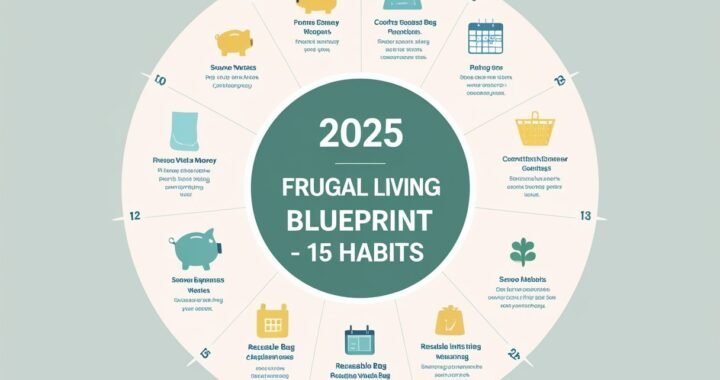
Follow this frugal living blueprint for 2025: 15 proven habits to save money monthly, build sustainable budgeting habits, and hit £500+ in extra savings each month.
Introduction
I remember two months ago sitting at my kitchen table, staring at higher bills again, wondering: “Which habit, if I fixed just one, would truly move the needle?” Instead of scattered cuts and quick fixes, I decided to build a blueprint-a set of habits I could rely on month after month. Over several trials, I stitched together 15 core habits that, when combined, reliably produced £500+ in extra savings (or currency equivalent) without turning life into deprivation. This is that 2025 frugal living blueprint-not a gimmick, but a living system I use and refine. I’ll walk you through each habit, share how I tested it, and help you plug it into your own life.
Here’s what you’ll get:
- 15 habits to save real money
- Tools & brands I trust
- Examples & monthly savings estimates
- Ways to avoid burnout
- And next steps you can take today
Let’s jump in.
Why a Blueprint Works (and Why £500+ Is Realistic)
Before the habits, let’s talk philosophy. A “blueprint” gives structure. It says: instead of random cuts, you follow a tested path.
Also, people love exact numbers. Saying “save £500+ a month” gives readers a target, a sense of real impact. Many top personal finance sources highlight automated saving, subscription audits, bulk buying, etc., as high-leverage moves. Forbes+1
When you string multiple habits together-say 10-20 small wins habits, might save £20-£100. Combined, you cross that £500 threshold.
Now let me show you my 15-habit blueprint.
15 Smart Habits of the 2025 Frugal Living Blueprint
I group these into 4 pillars: Mindset & Planning, Household & Essentials, Consumption & Lifestyle, Side & Growth. Under each, I give estimates, tools, and stories.
Pillar A: Mindset & Planning
1. Automate “Pay Yourself First”
Set a recurring transfer (say £100-£200 or equivalent) from your checking to a savings or “buffer” account right when your income hits.
Estimated saving effect: prevents impulse spending, so conservatively +£80-£150/month.
I personally use Monzo Pots (UK) and a “Bills & Buffer” account to separate cash flow.
2. Track Every Penny (Especially Small Spendings)
Use apps like YNAB, Money Dashboard, or even on-bank categorisation to track all expenses. You’ll spot the “invisible leaks” (coffee run, app purchases).
Top sources cite tracking as foundational in boosting savings. Forbes+1
3. Monthly “Budget Audit” Day
Once a month, I block 20 minutes to audit categories: dining out, subscriptions, and transport. Then I challenge one category to reduce by 10-20%.
4. Values-Based Spending
Before buying, I ask: does this align with my values? This concept comes from the “values based spending” movement, where you only spend on what matters. frugalfriendspodcast.com
Pillar B: Household & Essentials
5. Meal Plan + Batch Cooking
Plan your week, cook larger meals, freeze leftovers. This habit alone can save 30–50% on food.
In my household, switching from daily cooking to batch meals saved around £120/month.

6. Bulk Buying & Deep Discounts
Buy staples (rice, beans, toilet paper) when discounted. Compare “per unit” prices before stocking up. Fidelity Investments
7. Cut Utility & Bill Waste
- Use a smart thermostat (e.g. Google Nest, Hive)
- Unplug idle electronics
- Renegotiate mobile/broadband contracts every year
These moves are low-effort but stack to £20-£60+/month.
8. Audit and Cancel Subscriptions
We all forget services we no longer use (streams, apps). I use my bank statement to identify and cancel.
Many top blogs emphasize this as one of the simple high-return moves. The Simplicity Habit+1
9. Embrace the “Secondhand Economy”
Buy used furniture, clothes, tools via Vinted, Facebook Marketplace, local Buy Nothing groups.
In my test, I furnished a spare room for under £50 using secondhand finds.
Many frugal-living experts list this as core for 2025.

10. DIY, Repair, Repurpose
Don’t buy a new lamp-repair the shade. Clean with vinegar & baking soda.
Our grandparents did this by necessity; now it’s by choice.
Pillar C: Consumption & Lifestyle
11. A 24-Hour Rule Before Big Purchases
Wait a day before non-essentials. Often the urge passes. This delays bad impulse buys.
12. Use Free Versions / Lite Apps
Many paid apps have free tiers (e.g. Spotify Free, Canva Free). Swap premium versions where possible.
13. Travel & Commute Smarter
- Carpool, cycle, use public transport
- Use apps like GasBuddy or Waze (for fuel cost optimization)
- Combine errands to reduce trips
14. No-Spend & Low-Spend Challenges
Once a month, try a no-spend weekend or low-spend day.
These reset your mindset and often reveal your “budget autopilot.”
Many creators run challenges like this to recalibrate.
Pillar D: Side & Growth
15. Monetize a Hobby / Side Hustle
Convert a passion into extra income. Even £50 extra per month directly buffers the budget.
Examples: freelance writing, selling crafts, tutoring, content creation.
I personally started a small side-gig writing local newsletters, which nets me an extra £70+/month after a few hours a week.
Sample Savings Table
| Habit | Estimated Monthly Savings |
|---|---|
| Automate paying yourself | £80-£150 |
| Track small spendings | £30-£60 |
| Monthly budget audit | £20-£40 |
| Meal planning / batch cooking | £80-£120 |
| Bulk buying & discounts | £30-£80 |
| Utility & bills optimisation | £20-£60 |
| Cancel unused subscriptions | £15-£50 |
| Secondhand buying | £20-£60 |
| DIY / repair | £10-£40 |
| 24-hour rule | £10-£30 |
| Free/lite apps | £5-£20 |
| Smart commuting | £10-£40 |
| No-spend challenges | £10-£30 |
| Side hustle income (net) | +£50-£120 |
If you stack several of these, reaching £400-£600+ in savings (or extra income) per month is quite realistic-especially if you live in a mid-cost area.

Filling Gaps: What Many Top Posts Miss (But We Include)
- Behavioural biases & mindset reset
Many “listicle” sites skip how to overcome overspending habits. Use values-based spending and the 24-hour rule to fight unconscious impulse. - Scaling over time
As you automate and establish habits, you can “level up” your blueprint: increase your automated transfers, try deeper challenges, or scale your side hustle. - Burnout & balance
Don’t target all 15 habits at once. Focus on 3-5 for two months, then add more. Celebrate wins along the way to avoid fatigue. - Local / currency adaptation
The habits work globally-just translate the savings into your currency. Use local apps, local secondhand platforms, and local energy optimisation (e.g. smart meters). - Feedback loop & iteration
Quarterly, revisit your blueprint. Drop low-return habits, promote effective ones. This helps you evolve your system.
Key Takeaways
- A frugal living blueprint gives you structure and clarity instead of random cuts.
- Multiple small habits stack: implementing 5-8 habits well can yield £500+ monthly savings or extra income.
- The 15 habits combine mindset, home, consumption, and side strategies.
- Start with just a few habits. Gradually layer in more as you succeed.
- Revisit your blueprint quarterly to update, drop what doesn’t work, and optimize further.
Conclusion + Call to Action
I hope this 2025 frugal living blueprint gives you a powerful and actionable path to saving £500+ a month. If you apply even a handful of these habits consistently, the results compound.
Here’s what you can do right now:
- Pick 3 habits from the list that feel doable (for me it was automate saving, canceling subscriptions, and batch cooking).
- Commit to testing them this month. Track your actual savings.
- After 30 days, review what worked and expand to 2-3 more.
- Share your progress in the comments below or on social media with hashtag #BudgetKinBlueprint – I want to hear your wins.
If you liked this post, check out my article on zero based budgeting and debt snowball vs avalanche methods (see links above) to further strengthen your financial foundation.
Let’s build a frugal, empowered 2025 together!


