

Learn how our family achieved debt-free living by paying off £10,000 in just six months using a strict budget, smart strategies, and consistent action. (Focus keyword included.)
Introduction: Our Debt Wake-Up Call
When I first saw the spreadsheet total of £10,732 in credit card and personal loan debt, I felt sick to my stomach. That was January. Six months later, with discipline, teamwork, and a “no excuses” budget, we hit zero.
This post isn’t just a feel-good story. It’s a case study you can replicate. I’ll show you exactly what we did-the sacrifices, the mindset shifts, the tools, and the little wins-so your family can pursue debt-free living too.
By sharing our journey, I hope you gain:
- A step-by-step plan you can adapt
- Real tips to avoid common pitfalls
- Tools, apps, and resources we used
- Encouragement to push through hard months
So let me take you from debt-burdened to debt-free living-and show you how you can too.
Why We Chose the Debt Attack Strategy
Before we dove into paying, we asked: “Why now?” Here are the core motivations and principles behind our decision:
- Interest was bleeding us dry. The minimum payments mostly went to interest.
- We craved freedom. We were tired of feeling trapped by debt.
- We wanted to lead by example. We have children; we wanted them to see financial discipline in action.
- Momentum works. The faster we paid, the more energy and psychological advantage we had.
We decided to pursue debt-free living using a tight family budget and debt repayment methods (snowball/avalanche). We also leaned on strategies from “Top 8 Debt Reduction Strategies” guide.

How We Structured Our Debt Payoff Plan
Below is the core blueprint we followed. You can adapt it to your numbers, timeline, and lifestyle.
1. Take a complete inventory of your debts
We listed:
- Creditor
- Balance owed
- Interest rate
- Minimum payment
This let us see where we’d get the biggest “bang for our buck.”
2. Choose a payoff order: Snowball or Avalanche
We debated between the debt snowball method (smallest balances first) and debt avalanche (highest interest first). Ultimately, we used hybrid: we knocked off one small balance for psychological momentum, then switched to avalanche for efficiency.
This aligns with many debt-reduction guides that talk about using one of these proven strategies.
3. Build a razor-tight family budget
We created a zero-based budget: every dollar was assigned a job, whether for necessity, debt, or savings. We leaned heavily on guides like “How to Create a Simple Family Budget in 5 Easy Steps” and enjoyed Debt-Free Living.
Key categories:
- Fixed expenses (rent/mortgage, utilities, insurance)
- Variable essentials (groceries, transportation)
- Minimal entertainment / discretionary spending
- Debt payments (the “extra beyond minimum”)
- Small buffer / emergency fund
We slashed everything we could-subscriptions, dining out, impulse buys.
4. Increase income (side hustles, overtime)
We asked: how much more can we bring in? We:
- Did extra shifts
- Took on freelance / gig work
- Sold unused items
- Picked up odd jobs (babysitting, yard work)
All extra money went to debt.
5. Automate and enforce strict payments
We automated minimum payments. Then, once extra debt payments were budgeted, we manually made them early (not waiting until the due date).
We held “debt budget meetings” weekly to track progress, adjust, and encourage each other.
6. Visualize progress & celebrate small wins
We made a chart on the wall: starting £10,732 at the top, zero at the bottom. Each week, we crossed off a stripe.
When we eliminated a debt, we had a small (free or cheap) celebration-ice cream at home, movie night from the library, etc.
7. Plan for life after debt
Even while paying, we earmarked a tiny fund for occasional surprises. Once debt was gone, we transitioned to building an emergency fund and investing.
Our 6-Month Timeline: Month by Month Snapshot
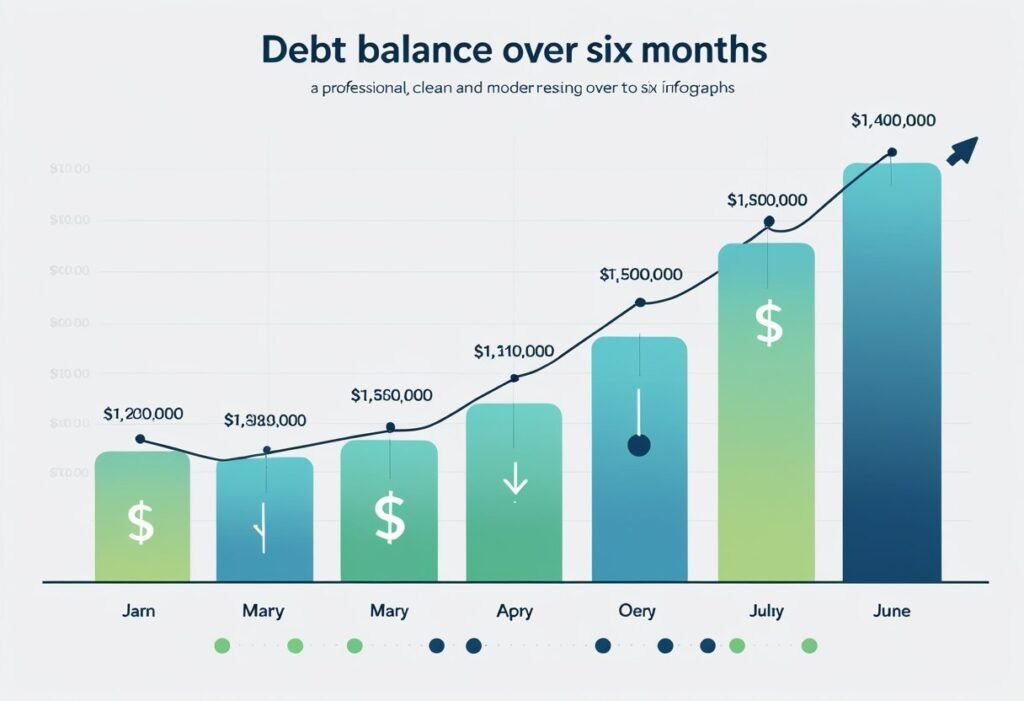
Here’s a simplified timeline of how we chipped away at £10,000 in 6 months:
| Month | Starting Balance | Extra Paid That Month | Balance End | Notes / Focus |
|---|---|---|---|---|
| Month 1 | £10,732 | £1,800 | £8,900 | Cut almost every discretionary cost; side gigs launched |
| Month 2 | £8,900 | £2,100 | £6,800 | Knocked out a small loan; gained momentum |
| Month 3 | £6,800 | £2,300 | £4,500 | Increased aggressiveness; more overtime |
| Month 4 | £4,500 | £1,500 | £3,000 | Slower month – family needed small flexibility |
| Month 5 | £3,000 | £1,500 | £1,500 | Really focused; pared back fun money deeper |
| Month 6 | £1,500 | £1,600 | £0 | Cleared the final debt mid-month |
By the end of month six, we saw £0 balance across all those debts. It was amazing-frustrating sometimes, but deeply satisfying.
Challenges, Mindset Shifts & Lessons Learned
Paying off debt is as much a mental game as a financial game. Here’s what we learned (and what I’d tell you):
- Fatigue is real. Some months we felt burned out. We leaned on small rewards and reminding ourselves of why.
- Temptation hits hardest near the end. When you’re “almost there,” even small lapses can derail you. We doubled down on accountability those weeks.
- Flexibility is okay-but within constraints. Some unexpected costs came up. We dipped into a small ‘buffer’ line in the budget but always replenished it.
- Communication matters. All family members needed to be aligned. If one spouse splurged secretly, it risked the whole plan.
- Don’t abandon your life. We still kept a minimal “fun line” in the budget so we didn’t feel starved.
- Momentum is powerful. Each paid-off debt gave us confidence and energy to push harder.
These lessons echo what top finance blogs emphasise: discipline, consistency, mindset, and adaptability.
Tools, Apps & Resources We Used
Here are the concrete tools and resources that helped us along the way:
- YNAB (You Need A Budget) – for zero-based budgeting and envelope-style categories
- Mint / Personal Capital – to see all accounts & debts in one place
- BudgetKin’s blog – we referenced posts like “10 Brilliant Budgeting Hacks to Stretch Your Paycheck”
- BudgetKin’s “Top 8 Debt Reduction Strategies” article for methods & mindset reinforcement
- Printed payoff chart – cheap but ultra effective
- Spreadsheets / Google Sheets – for planning and flexibility
Outbound authority resources we leaned on:
- Ramsey Solutions – 10 Characteristics of Debt-Free Living (for mindset reinforcement) Ramsey Solutions
- National Foundation for Credit Counselling (NFCC) – for advice on debt, consolidation, credit counselling (example resource)
- Consumer Financial Protection Bureau (CFPB) – for tips on how to choose debt relief or repayment options
Using real tools made abstract discipline concrete.

How You Can Replicate This (Your Blueprint)
If your family wants to go from debt to debt-free living, here’s your adapted action plan:
- Count your debts and pick a method (snowball, avalanche, or hybrid).
- Make a ruthless budget-eliminate or slash every discretionary line.
- Find extra income via side hustles, overtime, or selling stuff.
- Automate minimums, manually pay extras early.
- Meet weekly to review, tweak, encourage.
- Visualise progress using charts or graphs.
- Plan for post-debt life emergency fund, investing, and savings.
- Be consistent for 3 months – that’s where most transformation happens.
If you need help building your first tight budget, check out How to Create a Simple Family Budget in 5 Easy Steps

Key Takeaways
- Debt doesn’t vanish on its own-you need a plan, discipline, and action.
- You can pay off large debt amounts (like £10,000) in months if you commit fully.
- Mindset changes-saying “no,” delaying gratification, and teamwork-are as important as math.
- Tools, apps, and accountability are your allies, not optional extras.
- The same principles you use for paying debt will carry you into building wealth afterward.
Conclusion & Call to Action – Debt-Free Living
Watching that final balance hit zero in month six was one of the proudest financial moments of our lives. But more than the number, it was the transformation—our mindset, our habits, our confidence. That’s the true power of debt-free living: it’s not just about paying off bills, it’s about reclaiming control and peace of mind.
If our family journey inspires you, take your first step toward debt-free living today. Pick your top two or three debts, create a lean budget this week, and commit to an extra payment plan. Don’t wait for “someday” — every consistent step brings you closer to debt-free living and the financial freedom you deserve.
Pingback: The One-Page Budget Hack Busy Families Love - BudgetKin