
Discover real family costs UK households face, including housing, food, childcare, transport, bills and everyday expenses, plus practical ways to reduce costs.
Family costs UK households face can add up quickly. If you have ever checked your bank account and wondered where all your money has gone, you are definitely not alone.
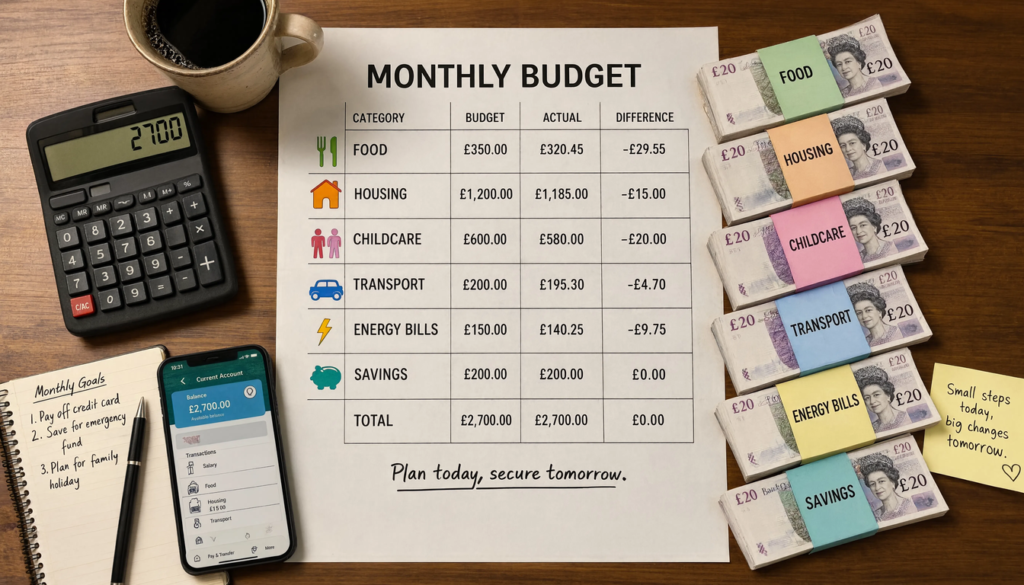
For most families, money does not disappear in one big payment. It is spread across housing, food, childcare, transport, energy bills, insurance, school costs, clothes, subscriptions and unexpected expenses. These everyday costs can make household budgeting feel difficult, especially when prices keep changing.
According to the Office for National Statistics, UK households spent an average of £676.60 per week in the financial year ending 2025. That works out at more than £35,000 per year before you even think about long-term savings, debt repayments or larger family goals.
This guide explains the biggest family costs UK households need to plan for, where money usually goes, and how families can start reducing pressure without cutting out everything they enjoy.

What Are Family Costs?
Family costs are all the expenses involved in running a home and supporting the people who live in it.
These costs usually include:
- Housing
- Food and groceries
- Gas and electricity
- Water bills
- Transport
- Childcare
- School and education costs
- Insurance
- Debt repayments
- Clothing
- Entertainment
- Savings and emergency funds
Every household is different. A single parent, a couple with a baby, and a family of six will all have very different spending patterns. But once you understand the main family costs UK households commonly face, it becomes easier to build a realistic budget.
The Biggest Family Costs UK Households Face
Most families spend the majority of their income in a few key areas. These are the costs worth reviewing first because they usually have the biggest impact on your monthly budget.
Housing Costs
Housing is usually the largest family expense.
This may include:
- Rent
- Mortgage payments
- Council tax
- Buildings insurance
- Contents insurance
- Service charges
- Ground rent
- Home maintenance
- Repairs
Housing costs can affect everything else in your budget. If rent or mortgage payments take up a large share of income, there is less room for food, bills, transport, savings and family activities.
For homeowners, maintenance is easy to forget. Repairs, boiler servicing, roof issues, decorating and replacement appliances can all create unexpected costs. Renters may not pay for major repairs, but rent increases can still place pressure on the household budget.
Food and Grocery Costs
Food is one of the most regular family costs because every household has to shop every week.
Food spending can include:
- Supermarket shopping
- Packed lunches
- School meals
- Baby food
- Snacks
- Takeaways
- Eating out
- Cleaning products and household essentials
GOV.UK Family Food data shows that average household spending on all food and drink, including food eaten out, was £47.19 per person per week in FYE 2024.
For larger families, even small weekly increases can become expensive over a year. A £20 increase in the weekly food shop adds up to more than £1,000 a year.
Energy and Household Bills
Running a home comes with regular household bills.
These may include:
- Electricity
- Gas
- Water
- Broadband
- Mobile phones
- TV licence
- Streaming services
- Home insurance
Energy bills can be especially difficult because they change with the seasons. Families often use more heating, lighting, washing and drying during colder months.
The Office for National Statistics reported that overall UK household costs, measured by the Household Costs Index, rose by 3.6% in the year to December 2025.
This is why reviewing bills regularly is one of the simplest ways to manage family costs UK households often overlook.
Transport Costs
Transport can become one of the largest household expenses, especially for working families.
Typical transport costs include:
- Fuel
- Car insurance
- Vehicle tax
- MOT
- Servicing
- Repairs
- Public transport
- Parking
- School travel
Families with more than one car may find transport costs run into thousands of pounds per year. Even families without a car may face high public transport costs, especially if commuting or school travel is involved.
Childcare Costs
Childcare can be one of the most expensive family costs UK parents face.
Common childcare costs include:
- Nursery fees
- Childminders
- Breakfast clubs
- After-school clubs
- Holiday clubs
- Wraparound care
For some parents, childcare costs can feel like a second rent or mortgage payment. This is why it is important to check whether you may be eligible for support such as Tax-Free Childcare, funded childcare hours or Universal Credit childcare support.
School and Education Costs
State education may be free, but school life still brings regular costs.
These may include:
- School uniforms
- Shoes
- PE kits
- Coats and bags
- School trips
- Lunches
- Stationery
- Clubs and activities
- Technology
School costs often come in waves. September, Christmas, summer trips and exam years can all create extra pressure.
The Cost of Raising Children
Children bring joy, but they also bring major financial responsibility.
Child-related costs can include:
- Childcare
- Food
- Clothing
- School uniforms
- Activities
- Birthdays
- Transport
- Technology
- Holidays
- Savings for the future
Child Poverty Action Group reported in 2025 that the cost of raising a child to age 18 is around £250,000 for a couple and £290,000 for a lone parent.
This does not mean every family will spend exactly that amount. But it does show why child-related costs need to be planned carefully as part of a long-term family budget.

Fixed, Variable and Irregular Family Costs
One of the easiest ways to manage family costs UK households face is to split expenses into three groups.
Fixed Costs
Fixed costs are expenses that usually stay similar each month.
Examples include:
- Rent or mortgage
- Council tax
- Broadband
- Insurance
- Loan repayments
- Mobile contracts
These are easier to plan for because they are usually predictable.
Variable Costs
Variable costs change from week to week or month to month.
Examples include:
- Food shopping
- Fuel
- Clothing
- Takeaways
- Days out
- Entertainment
These areas often offer the fastest savings because families can usually make small changes without completely changing their lifestyle.
Irregular Costs
Irregular costs do not happen every month, but they can still cause budget problems.
Examples include:
- Christmas
- Birthdays
- Car repairs
- School trips
- Holidays
- Appliance replacements
- Home repairs
Many budgets fail because they only include monthly bills and forget these irregular costs. A sinking fund can help by spreading these expenses across the year.
How to Reduce Family Costs
Reducing family costs does not mean cutting out every treat. It means finding areas where your money is not working hard enough.
Review Bills Every Year
Check whether you can save on:
- Broadband
- Mobile contracts
- Insurance
- Energy tariffs
- Subscriptions
Even small monthly savings can add up across the year.
Meal Plan
Meal planning can reduce food waste and make supermarket spending easier to control.
Simple changes include:
- Planning meals before shopping
- Using leftovers
- Batch cooking
- Buying own-brand items
- Reducing extra supermarket trips
Build Sinking Funds
Sinking funds help you save gradually for predictable future costs.
Useful sinking funds include:
- Christmas fund
- School uniform fund
- Car repair fund
- Holiday fund
- Birthday fund
Track Spending
Tracking spending is one of the quickest ways to understand where money is going.
You can use:
- A spreadsheet
- A notebook
- A budgeting app
- Bank categories
- A printable budget planner
The method matters less than the habit. Once you can see your spending clearly, it becomes much easier to reduce waste.
Family Costs Checklist
Review these areas regularly:
- Housing costs
- Council tax
- Energy bills
- Water bills
- Food spending
- Transport costs
- Childcare costs
- School costs
- Insurance policies
- Mobile contracts
- Broadband deals
- Subscriptions
- Debt repayments
- Savings contributions
A yearly review is useful, but a monthly check can help you spot problems much sooner.
Related Guides
As BudgetKin grows, this family costs UK hub should link to detailed guides that help households understand and reduce specific expenses.
Family Costs
- Cost of Raising a Child UK
- Cost of Childcare UK
- Cost of School Uniforms UK
- Cost of After-School Clubs UK
- Cost of Raising a Teenager UK
Family Budgeting
- Family Budget Planner UK
- Monthly Family Budget Template
- Weekly Family Budget
- Zero-Based Budgeting Guide
Household Bills
- Average Electric Bill UK
- Average Gas Bill UK
- Average Water Bill UK
- How to Reduce Household Bills
Children and Money
- Pocket Money by Age
- Teaching Kids About Money
- Saving for University
Income and Benefits
- Child Benefit Guide
- Universal Credit Guide
- Take Home Pay Calculator
FAQ
What are the biggest family costs UK households face?
Housing, food, transport, energy bills and childcare are usually among the biggest family costs UK households need to plan for.
How much does the average UK household spend?
According to the Office for National Statistics, UK households spent an average of £676.60 per week in the financial year ending 2025.
What is the most expensive part of raising a child?
For many families, childcare is one of the largest child-related expenses, especially during the early years before children are in full-time school.
How can families reduce household costs?
Families can reduce costs by budgeting, meal planning, reviewing bills, cutting unused subscriptions, building sinking funds and tracking spending regularly.
Should I track all family spending?
Yes. Tracking spending is one of the fastest ways to find where money is being wasted and where savings can be made.
Final Thoughts
Family costs UK households face can feel overwhelming when everything is rising at once. But understanding where your money goes is the first step towards feeling more in control.
Housing, food, childcare, transport and bills may be unavoidable, but that does not mean there is no room to improve your finances.
By reviewing costs regularly, planning ahead, tracking spending and making small changes across key areas, families can reduce pressure and build a stronger financial foundation.
The goal is not perfection. The goal is steady progress, less stress and a clearer plan for your household money.