

Credit cards are one of the most misunderstood money tools in the UK. For some families, they help smooth spending and protect cash flow. For others, they quietly create stress, debt, and a feeling of always being behind, even with a decent income.
This guide explains how credit cards really work in the UK, why families struggle with debt, and how to use credit safely. There is no judgment here, only clear explanations and practical rules you can actually follow.
How Credit Cards Actually Work
A credit card lets you borrow money from a lender to make purchases, up to an agreed credit limit. If you repay the balance in full each month, you usually pay no interest. If you carry a balance, interest is added, often at a high rate.
What trips families up is not the card itself, but how the system is designed.
Key things to understand:
- Interest is charged daily on unpaid balances
- Minimum payments mostly cover interest, not debt
- Credit limits are not spending recommendations
- Statements show what already happened, not what is affordable
Once you understand this, credit cards become far less intimidating.
Rising household expenses also influence debt levels. Understanding the cost of living for families in the UK can help households manage borrowing more effectively.
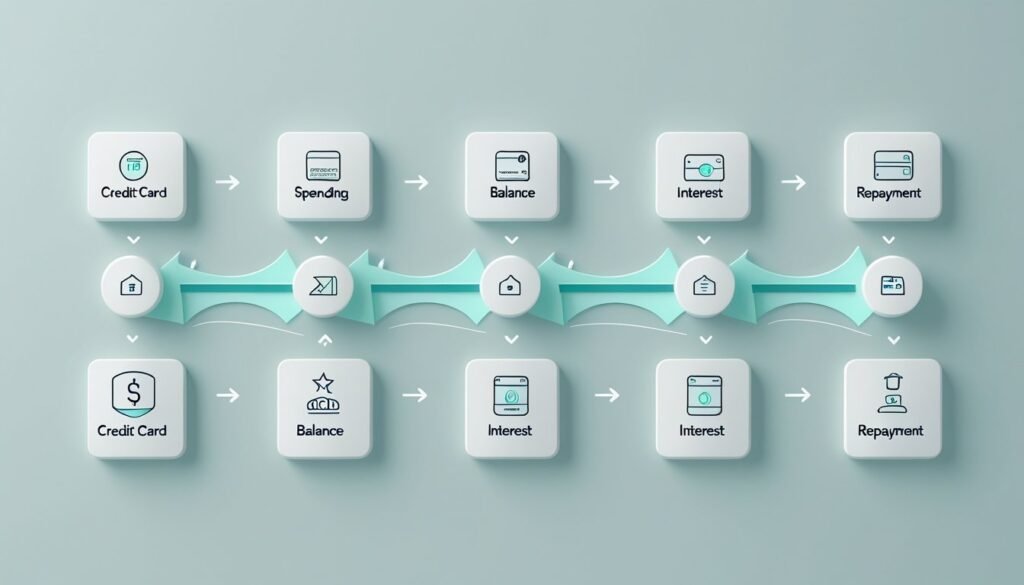
How Credit Card Interest Really Works
Credit card interest is one of the main reasons balances grow faster than people expect.
Most UK credit cards charge interest using a daily calculation, not a monthly one. This means interest is added to the balance every day that money remains unpaid.
In simple terms, the longer a balance stays on the card, the more interest builds.
For example, a credit card with a 22% annual interest rate (APR) means the lender charges roughly 22% per year on the remaining balance.
That interest is usually calculated daily using a formula similar to:Daily Interest=365APR×Balance
Because interest compounds over time, balances can grow quickly if only minimum payments are made.
This is why many families feel like they are “stuck” in credit card debt. A large portion of the payment may be covering interest rather than reducing the balance.
The most effective ways to reduce interest costs are:
- paying the full balance each month
- paying more than the minimum payment
- prioritising high interest cards first
- avoiding new purchases while paying off debt
This is why relying on minimum payments alone keeps many people in debt longer than expected.
Understanding how interest works removes much of the mystery around credit cards and helps families make better financial decisions.
Why Credit Card Debt Builds So Easily
Credit card debt rarely starts with one big mistake. It usually builds slowly through everyday spending.
Common reasons families slide into debt:
- Using cards to cover gaps between paydays
- Relying on minimum payments
- Losing track of spending across multiple cards
- Treating available credit as spare money
Many people do not realise how slowly minimum payments reduce debt. This guide explains what really happens when you only pay the minimum on a credit card.
Because the pain of paying is delayed, credit cards feel easier than cash. That convenience is exactly why they need clear rules.
Building savings is one of the best ways to avoid debt. Our saving money guide for families explains how to start.
Are Credit Cards Bad for Families or Can They Be Useful?
Many households quietly ask how much credit card debt is normal in the UK and whether their situation is typical.
Credit cards are neither good nor bad by default. They amplify habits you already have.
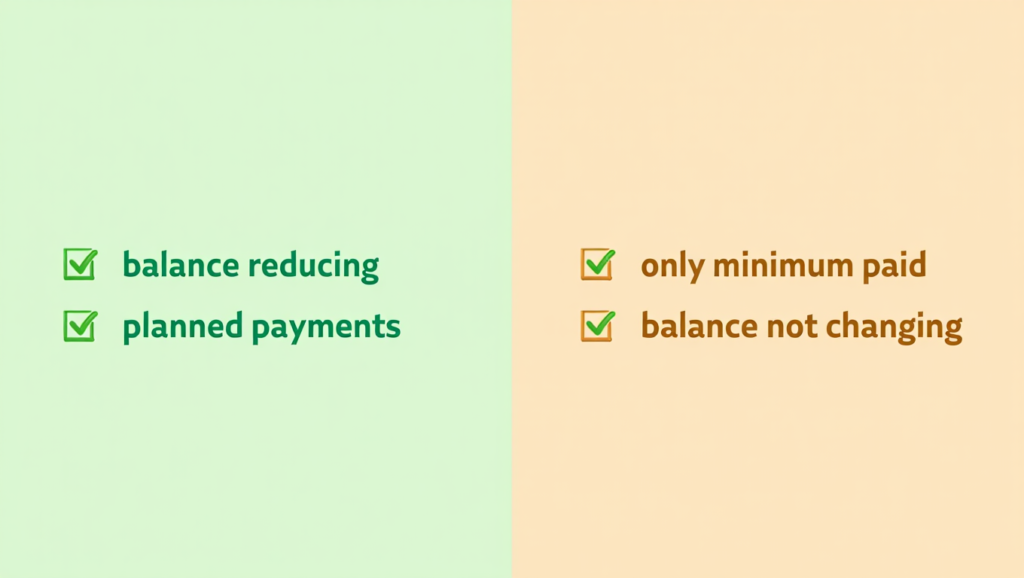
They can help families when:
- Spending is planned and tracked
- Balances are paid in full
- Cards are used for protection or rewards
- Cash flow is managed intentionally
They cause harm when:
- Cards are used to support an unrealistic budget
- Balances roll over month to month
- Spending replaces savings or emergency funds
- Debt becomes normalised
The difference is not income level, it is structure.
The Rules for Using Credit Cards Responsibly
Families who stay in control tend to follow a small set of consistent rules.
Core principles:
- Always know your balance before spending
- Pay in full whenever possible
- Keep credit card spending visible in your budget
- Avoid using cards to fund lifestyle gaps
- Review statements monthly, not just balances
These rules are simple, but they are powerful. They turn credit cards from a risk into a tool.
Credit Cards and Your Credit Score
Your credit score is influenced by how you use credit, not just whether you have it.
Important factors include:
- Credit utilisation, how much of your limit you use
- Payment history
- Length of credit history
- Number of active accounts
Using a card lightly and paying it off consistently often helps your score more than avoiding credit completely.
If you want a deeper explanation, see our guide on how credit card utilisation affects your credit score.
How Much Credit Card Debt Is Normal?
Many families quietly ask this question. There is no universal “normal”, but there are warning signs.
Debt may be manageable if:
- You know exactly how much you owe
- You can reduce balances monthly
- Interest is not consuming spare income
Debt becomes a problem when:
- Balances never fall
- Cards are used to cover essentials
- You feel anxious checking statements
- Minimum payments are the only plan
Debt is not a moral failure. It is a signal that something needs adjusting.
Managing Credit Card Debt Safely
If you already have credit card debt, the goal is clarity first, not panic.
Start by:
- Listing every card, balance, and interest rate
- Understanding minimum payments versus real progress
- Choosing a repayment strategy you can sustain
- Avoiding new debt while paying old balances
Many families make more progress with a calm, consistent plan than with aggressive short-term fixes.
Many families searching for how to get out of credit card debt in the UK start with a simple repayment plan and a clear understanding of their balances.
Choosing a clear repayment approach makes the process far easier. These proven debt repayment strategies to crush your debt show practical ways families can eliminate balances faster.
Credit Cards and Budgeting
Credit cards should fit inside your budget, not sit outside it.
Healthy approaches include:
- Treating card spending as immediate spending, not future spending
- Assigning card purchases to budget categories
- Reviewing spending weekly, not just monthly
- Using cards deliberately, not automatically
If credit card spending feels invisible, it is usually because it is not fully integrated into the budget.
A clear family budget helps prevent credit card balances from growing.

Common Credit Card Mistakes Families Make
Some habits look harmless but quietly create long-term debt. Our guide to credit card mistakes that hurt your credit score explains the most common traps families fall into.
Some mistakes are extremely common and very costly.
These include:
- Paying only the minimum
- Using cards for emergencies without a plan
- Opening too many cards too quickly
- Ignoring interest rates
- Assuming higher limits mean higher affordability
Avoiding just one or two of these can make a huge difference.
How Families Fall Into Credit Card Debt
Credit card debt rarely appears suddenly. It usually develops through small financial pressures that build over time.
Common triggers include:
Unexpected expenses such as car repairs or school costs
Rising household bills and food prices
Using credit to smooth irregular income
Lack of an emergency savings buffer
Once a balance begins to roll month to month, interest charges quickly slow progress.
This is why many families focus first on building a small emergency fund before aggressively paying down credit cards.
Frequently Asked Questions About Credit Cards and Debt
Should I pay my credit card in full every month?
If you can, yes. Paying in full avoids interest and keeps debt from building.
Is it bad to carry a balance?
Carrying a balance costs money in interest. It may be necessary short term, but it should not become permanent.
How many credit cards should a family have?
Enough to meet your needs without losing control. More cards mean more tracking.
Do credit cards ruin budgets?
They can, but only if spending is not tracked properly.
Is it better to save or pay off debt first?
This depends on interest rates and stability. Many families do both at the same time.
Next Steps and Helpful Tools
If you want to take control of credit cards and debt:
- Start with clear rules for card use
- Track balances weekly
- Build a small buffer to reduce reliance on credit
- Review progress monthly
Credit cards should support your family’s stability, not undermine it.
BudgetKin Credit Card Guides
If you want to go deeper, these guides explain specific parts of credit cards and debt:
• What really happens when you only pay the minimum on a credit card
https://budgetkin.com/paying-the-minimum-on-a-credit-card-what-really-happens-in-the-uk/
• Credit card utilisation explained and why it matters
https://budgetkin.com/credit-card-utilisation-explained-and-why-it-matters-in-the-uk/
• Credit card mistakes that hurt your finances
https://budgetkin.com/credit-card-mistakes-that-hurt-your-finances/
• Proven debt repayment strategies to crush your debt
https://budgetkin.com/proven-debt-repayment-strategies-to-crush-your-debt/