
Learn how to create a realistic family budget UK households can use to manage bills, reduce overspending, build savings and plan ahead.
A family budget UK households can actually stick to is not about cutting out everything you enjoy. It is about understanding where your money goes, making sure the important costs are covered first, and leaving room for the things that matter most to your family.
Many families know roughly what they earn each month, but far fewer know exactly where every pound goes. Food, bills, childcare, transport, subscriptions, school costs and unexpected expenses can quickly add up.
According to the Office for National Statistics, UK households spent an average of £676.60 per week in the financial year ending 2025. That shows why having a clear household budget matters, especially when family costs continue to put pressure on everyday finances.
This guide explains how to create a practical family budget UK families can use in real life, including income, bills, savings, debt repayments and future costs.

What Is a Family Budget UK Households Can Use?
A family budget is a simple plan for managing all the money coming into your household and all the money going out.
It usually includes:
- Wages and salaries
- Self-employed income
- Child Benefit
- Universal Credit
- Side income
- Household bills
- Food spending
- Childcare
- Transport
- Savings
- Debt repayments
- Future expenses
The goal is simple. You want to tell your money where to go before it disappears.
MoneyHelper explains that a budget planner helps you add up income and outgoings, then shows what is left over and where savings may be possible.
Why Family Budgeting Matters
Without a budget, it is easy to lose track of spending.
That can lead to:
- Overspending
- Relying on credit cards
- Missing savings goals
- Not preparing for annual costs
- Feeling stressed about money
With a family budget UK households can follow, you can:
- Pay bills more confidently
- Build savings
- Prepare for emergencies
- Reduce debt
- Plan for birthdays, Christmas and holidays
- Understand what your family can really afford
A good budget does not need to be perfect. It needs to be honest, realistic and easy enough to keep using.
The Five Building Blocks of a Family Budget
1. Household Income
Start with all the money coming into your household.
This may include:
- Employment income
- Self-employed income
- Overtime
- Bonuses
- Child Benefit
- Universal Credit
- Maintenance payments
- Pension income
- Side hustles
If your income changes from month to month, use an average monthly amount or budget from your lowest realistic income.
2. Essential Costs
Essential costs are the bills and payments that need to come first.
Examples include:
- Rent or mortgage
- Council tax
- Gas and electricity
- Water
- Food
- Transport to work
- Childcare
- Insurance
StepChange explains that some bills are priority payments because the consequences of not paying them can be more serious.
3. Lifestyle Spending
Lifestyle spending is money spent on things that improve family life but are not essential.
Examples include:
- Takeaways
- Streaming subscriptions
- Gym memberships
- Days out
- Hobbies
- Clothes
- Entertainment
This is often the easiest area to adjust if your budget feels tight.
4. Savings
Savings should be part of your family budget if possible.
Examples include:
- Emergency fund
- Christmas fund
- Holiday fund
- School uniform fund
- Car repair fund
- Children’s savings
MoneyHelper suggests that three to six months of essential outgoings is a useful emergency savings target where possible.
5. Future Expenses
This is the area many budgets miss.
Future expenses may include:
- Christmas
- Birthdays
- School trips
- Car servicing
- Home repairs
- Vet bills
- Holidays
- Insurance renewals
If these costs are not included in your budget, they can feel like emergencies when they arrive.
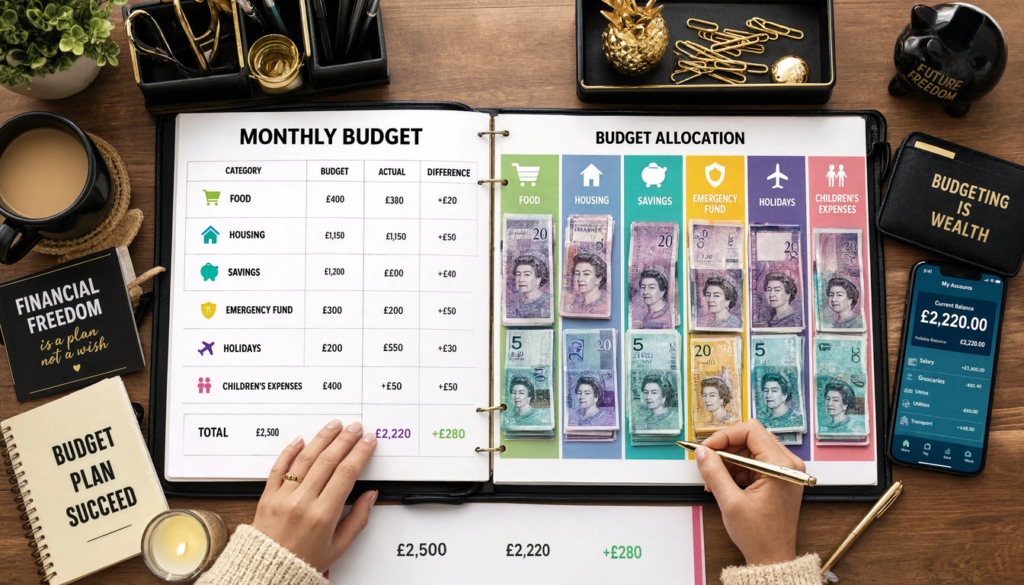
How to Create a Family Budget UK Families Can Follow
Step 1: Calculate Your Income
Add together all regular monthly income.
Include:
- Wages
- Benefits
- Child maintenance
- Side income
- Regular support payments
Use take-home pay rather than gross salary. This means the amount that actually arrives in your bank account after tax, National Insurance, pension contributions and other deductions.
Step 2: List Every Expense
Go through:
- Bank statements
- Credit card statements
- Direct Debits
- Standing orders
- Receipts
- Banking app categories
Many families underestimate spending until they check their accounts properly.
Step 3: Categorise Your Spending
Group spending into simple categories.
Housing
- Rent
- Mortgage
- Council tax
- Home insurance
Household Bills
- Energy
- Water
- Broadband
- Mobile phones
Food
- Groceries
- Packed lunches
- School meals
- Takeaways
Children
- Childcare
- Uniforms
- Activities
- School trips
Transport
- Fuel
- Car insurance
- Parking
- Public transport
Leisure
- Days out
- Subscriptions
- Hobbies
- Eating out
Step 4: Compare Income Against Spending
Use this simple formula:
Income minus expenses equals money left over.
If there is money left over, decide where it should go. This might be savings, debt repayment or a future family goal.
If spending is higher than income, look for areas to reduce. Start with flexible spending, subscriptions, food waste and contracts that may be out of date.
Popular Family Budgeting Methods
Zero-Based Budgeting
Zero-based budgeting means every pound has a job.
Your income is assigned to bills, food, savings, debt repayment and spending categories until there is nothing left unplanned.
This can work well for families who want strong control over their money.
50/30/20 Budget
The 50/30/20 method splits income into three broad groups:
- 50% for needs
- 30% for wants
- 20% for savings or debt repayment
HSBC explains the 50/30/20 rule as a way of splitting money between needs, wants and your future.
This method is simple, but it may need adjusting if your essential costs are higher than 50% of your income.
Envelope Budgeting
Envelope budgeting means separating money into spending categories.
Examples include:
- Food
- Fuel
- Clothing
- Entertainment
- School costs
Once the category money is gone, spending stops until the next budget period.
Common Family Budget Mistakes
Forgetting Annual Costs
Many families budget for monthly bills but forget annual or occasional costs.
Examples include:
- Christmas
- Car servicing
- Insurance renewals
- School uniforms
- Birthdays
Not Tracking Spending
A family budget UK households can trust needs real numbers.
If you guess your spending, the budget may look better than reality.
Making the Budget Too Strict
If your budget has no room for real life, it probably will not last.
Allow some space for small treats, family time and unexpected extras.
Ignoring Emergency Savings
Unexpected expenses happen.
Even a small emergency fund can stop a broken appliance, car repair or school cost from becoming a debt problem.
Family Budget Examples
Family of 3
A family of three may need to focus on:
- Housing
- Food
- Childcare
- Transport
- Savings
Family of 4
A family of four may see higher spending on:
- Groceries
- School costs
- Activities
- Clothing
- Energy usage
Family of 5 or More
Larger families often need to plan carefully for:
- Food
- Utilities
- Transport
- School costs
- Birthdays and Christmas
The bigger the household, the more important it becomes to plan irregular costs in advance.
Budgeting Goals Worth Working Towards
A family budget works better when it has a purpose.
Useful goals include:
- Building a £500 starter emergency fund
- Building a £1,000 emergency fund
- Paying off credit card debt
- Saving for Christmas
- Saving for a family holiday
- Reducing household bills
- Saving for school costs
- Saving for a home deposit
Clear goals help families stay motivated because the budget becomes about progress, not restriction.

Family Budgeting Checklist
Review monthly:
- Income
- Bills
- Food spending
- Childcare
- Transport
- Debt repayments
- Savings
- Upcoming expenses
Review yearly:
- Insurance
- Broadband
- Mobile contracts
- Energy tariffs
- Financial goals
- Emergency fund progress
Related Guides
As BudgetKin grows, this family budget UK guide should link to more detailed guides that help families manage money step by step.
Family Budget Examples
- Family Budget for a Family of 3
- Family Budget for a Family of 4
- Family Budget for a Family of 5
- Family Budget for a Family of 6
Budgeting Methods
- Zero-Based Budgeting Explained
- 50/30/20 Budget Rule
- Envelope Budgeting Guide
- Budget Categories List
Budget Planning Tools
- Family Budget Planner UK
- Monthly Family Budget Template
- Weekly Family Budget Template
- Budget Calendar Template
FAQ
What is the best family budgeting method?
There is no single best method. Many families use zero-based budgeting, the 50/30/20 rule or envelope budgeting depending on their income, goals and spending habits.
How often should I review my family budget?
Most households should review their family budget once a month. A yearly review is also useful for insurance, broadband, mobile contracts and bigger financial goals.
What percentage of income should families save?
This depends on your household income and costs. The most important step is building a consistent savings habit, even if you start with a small amount.
What is the biggest family budgeting mistake?
One of the biggest mistakes is forgetting irregular expenses such as Christmas, birthdays, car repairs, school trips and insurance renewals.
Should children be included in a family budget?
Yes, child-related costs are often a major part of a household budget. Childcare, uniforms, school trips, activities and food should all be planned for.
Final Thoughts
A successful family budget UK households can stick to is not about perfection.
It is about creating a simple plan that helps your family manage money confidently, reduce stress and move closer to your financial goals.
Start with your real income, list your real expenses, plan for future costs and review your budget regularly.
The best family budget is not the strictest one. It is the one your household can keep using month after month.